
November
Growth Engineered
Get Upto
33.3%
Off
Why Nigerian Businesses Are Losing Customers Without a Website in 2026

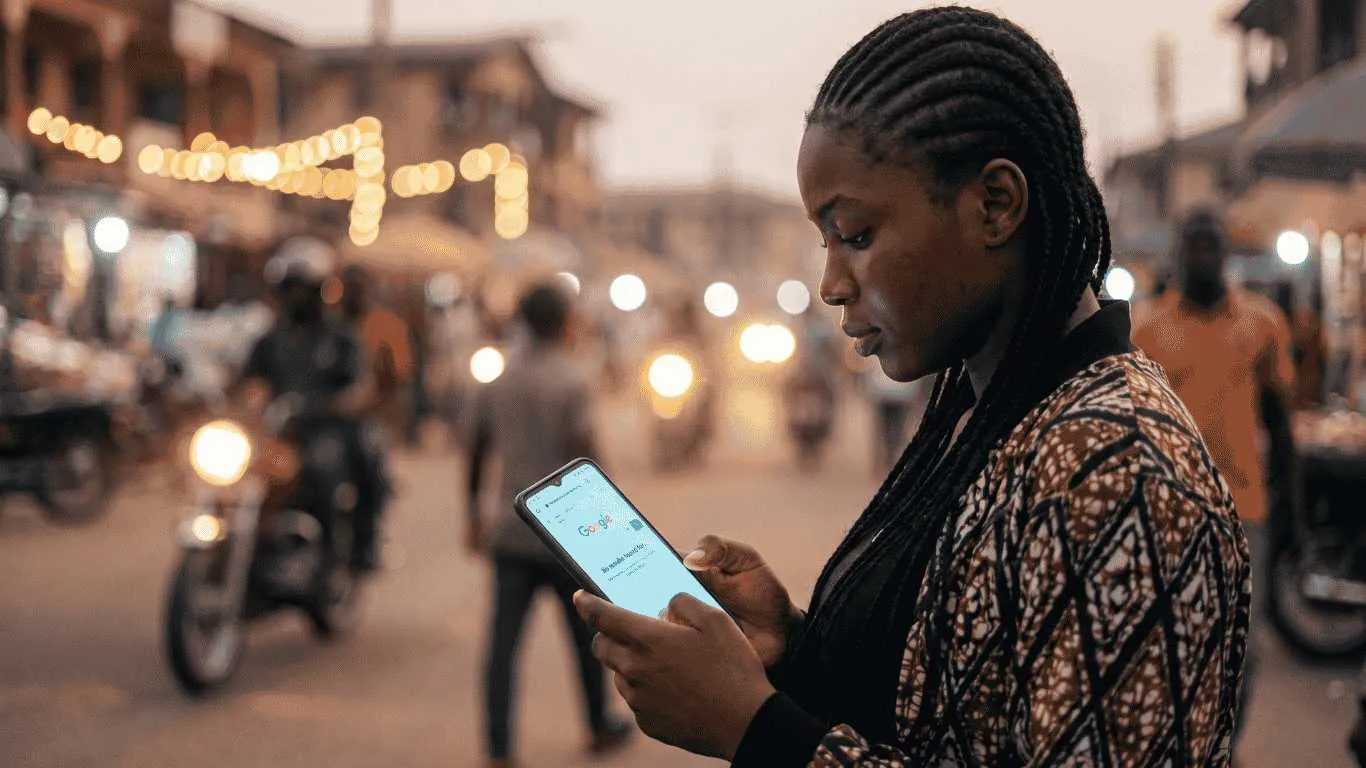
A woman in Surulere needs a caterer for her daughter’s wedding. She’s heard about a small catering business two streets from her, a cousin mentioned them once, in passing. She opens Google, types the business name, and gets nothing. No website. No reviews. Just a blank search result and a nagging feeling: if I can’t find them, can I trust them with my event?
She books someone else. The caterer never even knows they lost the job.
This is happening across Nigeria, every single day, to businesses that are good at what they do but invisible where their next customer is actually looking., and that is why nigerian businesses are losing customers without a website in 2026. In 2026, that invisibility isn’t a small gap, it’s the difference between a business that grows and one that quietly stalls.
In this article:
- The shift in Nigerian customer behavior driving this problem
- What actually happens when a customer can’t find you online
- Five specific ways a missing website is costing you money right now
- A real-world illustration of the cost
- Answers to the questions Nigerian business owners keep asking about websites
The Nigerian Business Landscape Has Changed, Has Your Strategy?
Nigeria now has over 40 million micro, small, and medium enterprises, and internet penetration sits at roughly 55–60%, putting more than 120 million Nigerians online. Over 90% of those users access the internet primarily through their smartphones, meaning your customer isn’t sitting at a desktop researching you. They’re standing in traffic on the Third Mainland Bridge, phone in hand, deciding who gets their money in the next sixty seconds.
For years, an Instagram page and a WhatsApp number were enough. A lot of Nigerian SMB owners still believe that’s true. It isn’t, not anymore.
Instagram and WhatsApp are relationship tools. They’re brilliant once a customer already knows you. But they don’t answer the first question a new customer asks: is this a real, credible business? A website does. Instagram wasn’t built to answer that question, Google was.
Ask yourself: when was the last time you searched a business by its Instagram handle instead of typing its name into Google first?
What Happens When a Customer Can't Find You Online
Here’s what a lot of business owners get wrong, they assume “no website” simply means “fewer options for the customer to find me.” It’s worse than that. It actively damages trust before the customer has even spoken to you.
Think about it from the customer’s side. A business with a professional website looks established, serious, and accountable. A business with only a personal WhatsApp number and an Instagram page that hasn’t posted in three weeks looks like it might not exist tomorrow. Fair or not, that’s the split-second judgment happening in your customer’s head.
The Google Search Test
Try this right now: open a new browser tab and search your own business name. Not your Instagram handle, your actual business name, the way a stranger would type it.
What comes up? If it’s nothing, or a Facebook page you haven’t touched since 2023, or worse, a competitor with a similar name you’ve just experienced exactly what your customers experience. That’s the moment they decide whether to call you or scroll to the next result.
5 Ways a Missing Website Is Costing You Customers Right Now
- You're Invisible in Search, And Your Competitor Isn't
Every day someone searches “wedding caterer in Lagos” or “boutique hotel in Ikoyi,” Google needs a website to show. If yours doesn’t exist, that search simply skips you and goes to whoever does have one, even if your food, your rooms, or your service is genuinely better.
- You Have No Storefront While You Sleep
A website works at 2am. It answers questions, shows pricing, and lets a customer book or inquire while you’re asleep, in a client meeting, or offline entirely. Without one, every single lead depends on you, or your phone, being awake and available.
- Corporate and B2B Clients Quietly Rule You Out
A retail customer might forgive the absence of a website. A corporate client evaluating vendors, a law firm’s client doing due diligence, or a company sourcing a supplier rarely will. No website often means “not established enough to work with”, and you’ll never hear that objection, because they simply won’t reach out.
- You Don't Own Your Own Story
Post on Instagram today and an algorithm decides who sees it. Change the algorithm tomorrow, and your reach can drop overnight, it’s happened to thousands of Nigerian businesses already. A website is the one digital asset you fully control: no algorithm, no platform ban, no shifting rules. It’s yours.
- You're Losing Data You'll Never Get Back
Every visitor to a website can be tracked, retargeted, and followed up with. Every visitor to your Instagram page who doesn’t follow you disappears completely, no email, no number, no way to bring them back. That’s a customer you paid to attract (through ads, referrals, or word of mouth) who simply vanishes.
Have you checked what shows up when someone Googles your business today? What did you find?
Building a Digital Presence That Actually Wins Customers
Every one of these five gaps is fixable, and none of them require a massive budget or a six-month project. What they require is treating your website as infrastructure, not decoration: something that works for your business the same way your storefront, your staff, or your delivery van does.
This is exactly the kind of challenge we help Nigerian businesses solve every day, from setting up the right automation to making sure a website is doing more than just existing online, actually generating leads while the owner sleeps.
Related Blogs